
These exploring mixtures and their separation class 9 notes condense Chapter 5 of the Science (Exploration) textbook into a quick revision guide. You get every key definition, the three concentration formulas with original worked examples, the solubility rules, and all eight separation techniques — each with an NCERT page reference.
Use this page for revision, not for copying exercise answers. The ideas are ordered the way a teacher builds them: first classify mixtures, then measure concentration, then separate components by exploiting their different properties.
Why does separation matter? Sugar crystals from sugarcane and detecting malaria from a few drops of blood are both separation problems (NCERT, p. 73). Every method in this chapter works because a physical property differs between the components.
Exploring Mixtures and their Separation Class 9 Notes: What the Chapter Covers
The chapter builds in four clear stages. Work through them in this order and most questions answer themselves:
- Classify mixtures as homogeneous or heterogeneous.
- Meet solutions — the solute that dissolves, and the solvent that dissolves it.
- Express concentration as % m/m, % m/v or % v/v.
- Understand solubility and saturated solutions.
- Separate homogeneous mixtures by crystallization, distillation, fractional distillation and paper chromatography.
- Separate heterogeneous mixtures with a separating funnel, sublimation, centrifugation and coagulation.
- Sort mixtures into solutions, suspensions and colloids by particle size.
- Use the Tyndall effect as a practical test for a colloid.
This page is part of our Class 9 Science notes; the full textbook PDF is free on the official NCERT portal (ncert.nic.in) if you want to check any page.
What Makes a Mixture Homogeneous or Heterogeneous
A well-stirred sugar-and-water mixture is equally sweet in the first and the last sip — that is the defining test of a homogeneous mixture (NCERT, p. 74). The two classes differ only in whether the composition is uniform:
| Term | Meaning | Example |
|---|---|---|
| Homogeneous mixture | Uniform composition throughout; every part is identical | Sugar in water, vinegar (acetic acid in water), aerated drinks (carbon dioxide in water) |
| Heterogeneous mixture | Not uniform; particles are visible and settle with time | Sand in water, oil and water |
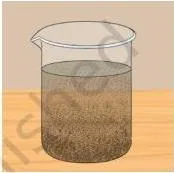
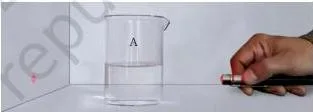
Notice the difference in the two figures: in Fig. 5.1 the solution looks identical everywhere, while in Fig. 5.2 the sand particles are plainly visible and settle over time.
Is the mixture of oil and water homogeneous or heterogeneous? Heterogeneous — the two liquids form separate layers and never blend into one, so the mixture is not uniform. This is exactly the question the textbook poses on p. 74.
Solutions: Solute, Solvent and Concentration
A solution is a homogeneous mixture, and every solution is built from a solute and a solvent (NCERT, p. 75):
| Term | Meaning | Example |
|---|---|---|
| Solution | A homogeneous mixture of two or more substances | Salt solution |
| Solute | The substance that gets dissolved | Sugar in sugar-water |
| Solvent | The substance that dissolves the solute | Water in sugar-water |
| Concentration | The amount of solute dissolved in a given amount of solvent or solution | The fixed salt-and-sugar amounts in ORS |
Concentration is a measurable ratio, not a vague idea of “strength”. The ORS example proves it: if you change the amount of salt or sugar added to a fixed volume of water, or change the volume of water, you still get a salt-sugar solution — but it is no longer ORS (NCERT, p. 75). The right proportion is essential.
The same logic guides farmers. Mix too little pesticide into a fixed amount of water and crops stay unprotected; too much and the crops, soil and environment are damaged (NCERT, p. 75).
Meet a scientist: Dilip Mahalanabis, an Indian paediatrician, developed and implemented the ORS treatment for dehydration caused by diseases such as diarrhoea and cholera; after WHO popularised it worldwide, it saved millions of lives (NCERT, p. 75).
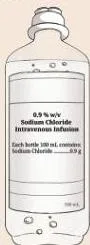
The saline drip shown in Fig. 5.5 previews the mass-by-volume idea: 0.9% m/v means 0.9 g of salt in every 100 mL of solution, which is safe for blood and replaces lost fluids (NCERT, p. 77).
Three Ways to Express Concentration: % m/m, % m/v, % v/v
All three formulas have the same shape — one quantity over the total solution, times 100. The denominator is always the solution, never the solvent.
1. Mass by mass percentage (% m/m or % w/w)
\[ \text{Mass by mass percentage} = \frac{\text{Mass of solute}}{\text{Mass of solution}} \times 100 \quad \text{(Eq. 5.1)} \]
It tells you how many grams of solute sit in 100 g of solution (NCERT, p. 76). Used for homogeneous mixtures and also for packaged solids such as milk powder and spice mixtures.
2. Mass by volume percentage (% m/v or % w/v)
\[ \text{Mass by volume percentage} = \frac{\text{Mass of solute}}{\text{Volume of solution}} \times 100 \quad \text{(Eq. 5.2)} \]
It tells you how many grams of solute sit in 100 mL of solution (NCERT, p. 76). Used when measuring liquid volume is easier than weighing — typical in medicines and labs, such as a 5% glucose drip.
3. Volume by volume percentage (% v/v)
\[ \text{Volume by volume percentage} = \frac{\text{Volume of solute}}{\text{Volume of solution}} \times 100 \quad \text{(Eq. 5.3)} \]
It tells you how many millilitres of solute sit in 100 mL of solution (NCERT, p. 77). Used when two miscible liquids are mixed — perfumes, cosmetics, vinegar.
Which formula do I use? The textbook lists the methods but does not say when to pick each. This decision table fills that gap:
| Situation | Method | Why |
|---|---|---|
| Solid mixed with solid (spice mixture, milk powder) | % m/m | Both components are measured by mass |
| Solid dissolved in liquid (glucose drip, saline) | % m/v | Measuring the liquid’s volume is easier than weighing solute and solvent separately |
| Two miscible liquids (perfume, vinegar) | % v/v | Both components are measured by volume |
The unit used in industry is often written as % w/w (weight by weight). Because weight and mass are used interchangeably, % w/w and % m/m are numerically equal (NCERT, p. 77).
Solubility and Saturated Solutions: The Key to Crystallization
| Term | Meaning |
|---|---|
| Solubility | The maximum amount of solute that dissolves in a fixed quantity of solvent (100 mL or 100 g) at a given temperature (NCERT, p. 77) |
| Saturated solution | A solution that cannot dissolve any more solute at that temperature (NCERT, p. 77) |
| Solubility curve | A graph of solubility versus temperature (NCERT, p. 78) |
Why is temperature part of the definition? Because the solubility of a solid in a liquid generally increases with temperature, while the solubility of a gas dissolved in a liquid generally decreases as temperature rises (NCERT, p. 77).
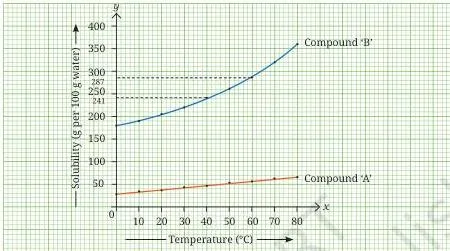
Practise reading the curves in Fig. 5.6 the way Activity 5.2 asks (NCERT, p. 78):
- Compound A’s solubility at 20 °C is less than its solubility at 60 °C — the curve climbs.
- Compound B behaves the same way: its solubility at 20 °C is less than at 60 °C.
- Compound A rises faster than compound B as temperature increases, because its curve is steeper.
The bridge to crystallization: if you saturate a solution at a high temperature and cool it slowly, the excess solute can no longer stay dissolved, so it separates out as a pure solid — often as crystals.
For example, a saturated solution of compound B in 100 g of water holds 287 g at 60 °C, but at 40 °C only 241 g can remain; the rest comes out of the solution (NCERT, p. 78).
A crystal is a solid whose particles are arranged in a regular geometric pattern (NCERT, p. 78). You already know some: rock salt, the sugar (mishri) crystals that grow while making candy, snowflakes and frost on window panes.
Separation Techniques for Homogeneous Mixtures
These four techniques handle mixtures whose components are dissolved and invisible — you must exploit a hidden property such as solubility, boiling point or rate of movement.
Crystallization: pure solid from a saturated solution
What it separates: a pure solid from its saturated solution; also purifies solids by removing unwanted impurities. Property it uses: the difference in a substance’s solubility at different temperatures.
To grow copper sulfate crystals, follow Activity 5.3 (NCERT, pp. 78–79):
- Add about 1 g of copper sulfate to 25 mL of water with a drop of dilute sulfuric acid (added by the teacher — copper sulfate is toxic), and heat gently in a water bath while stirring.
- Keep adding copper sulfate until the solution is saturated (Fig. 5.8a).
- Filter the hot solution to remove insoluble impurities (Fig. 5.8b).
- Cool the filtrate slowly without disturbing it, so large, shiny, well-shaped blue crystals form (Fig. 5.8c).
- Filter the crystals, rinse them with cold water and dry on a watch glass.
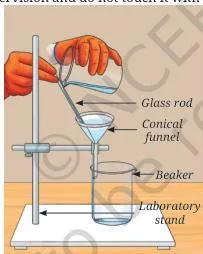
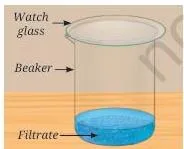
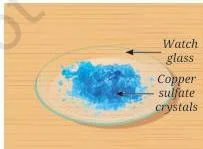
Salt from seawater is the everyday version: the water evaporates over time and salt crystals are collected from the sea (Fig. 5.9 in the textbook). Ancient coastal communities in India used the same idea — boiling sea brines for panga salt and evaporating seawater for karkatch salt (NCERT, p. 81).
Distillation: separating liquids by boiling point
What it separates: two miscible liquids whose boiling points differ by at least about 25 °C, or a liquid from a solution containing dissolved solids. Property it uses: the difference in boiling points.
The lower-boiling liquid vaporises first; its vapour passes through a condenser, where circulating water or air cools it back into a pure liquid collected in a separate vessel. The other liquid stays in the distillation flask (NCERT, p. 81).
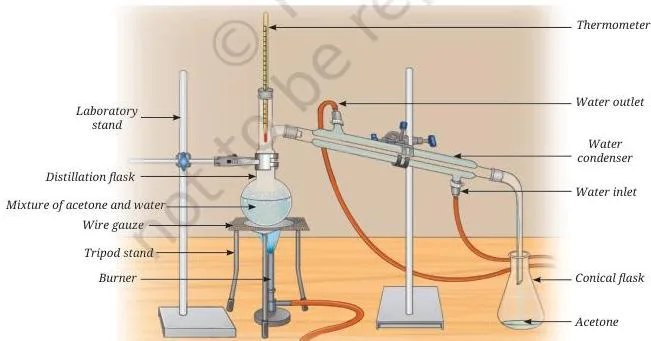
Acetone and water are separated this way because acetone boils at about 56 °C and water at 100 °C (NCERT, p. 81). The large gap lets one liquid vaporise before the other forms much vapour. Fractional distillation refines the same idea.
Fractional distillation: small boiling-point differences
What it separates: components whose boiling points differ by less than 25 °C. Property it uses: small boiling-point differences, exploited within a single column.
Crude petroleum is cracked into its fractions — petroleum gas, petrol, kerosene, diesel and more — by fractional distillation (NCERT, p. 82). The gaseous fraction is compressed into steel cylinders and liquefied into LPG for domestic fuel.
Paper chromatography: separating by rate of movement
What it separates: coloured components of a mixture, using differences in how fast each moves on paper. Property it uses: different interactions of each component with the solvent and the paper.
The name means “writing with colour” — from the Greek chroma (colour) and graphein (to write) — because the technique was first used to separate dyes and inks (NCERT, p. 83).
Follow Activity 5.5 (NCERT, p. 83):
- Draw a horizontal pencil line 2 cm from the bottom of a strip of chromatographic paper.
- Mark a single spot of black sketch-pen ink at the centre of the line (Fig. 5.15).
- Pour enough water to make a thin layer at the bottom of a beaker.
- Stand the strip in the water so its lower end dips in — the water level must stay below the ink spot.
- Watch the ink split into different colour spots as the water rises through the paper.
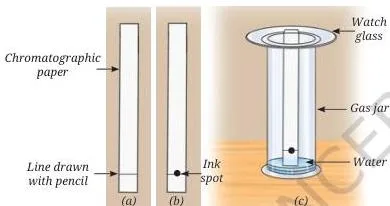
You can extend the same method to separate the pigments in green spinach leaves, coloured flower petals or green food colour — using alcohol or a solvent mixture when water alone will not work.
Separation Techniques for Heterogeneous Mixtures
These four methods handle mixtures whose parts stay visibly separate — you can usually see them or feel a difference in size or state.
Separating funnel: two immiscible liquids by density
What it separates: two immiscible (non-mixing) liquids. Property it uses: their different densities, which makes them form two layers.
In Activity 5.6, 5 mL of mustard oil and 20 mL of water are poured into a separating funnel (NCERT, p. 84). The yellow mustard oil floats as the upper layer because it is less dense than water.
Open the stopcock slowly to drain the lower water layer into a container, close it when the water is almost gone, discard the small mixed portion, then collect the oil separately.
Sublimation: a solid that skips the liquid state
What it separates: a sublimable solid from a non-sublimable solid. Property it uses: whether the solid changes directly from solid to vapour below its melting point.
Sublimation is the change of a solid directly into vapour (below its melting point) without passing through the liquid state; when the vapour cools back into a solid without becoming liquid, that reverse change is called deposition (NCERT, p. 85).
In Activity 5.7, a mixture of crushed camphor and sand is heated under an inverted funnel plugged with cotton. Camphor sublimes and re-deposits as white solid on the cool funnel wall, while the sand stays in the china dish (NCERT, p. 85). Dry ice (solid carbon dioxide) also sublimes.
Naphthalene behaves the same way, which is why sublimation is the right method for a naphthalene-and-sand mixture.
Alloys — a homogeneous mixture that physical methods cannot crack: When hot melted metals are mixed and cooled, they solidify into an alloy that looks like a single metal. Because the components are uniformly dissolved in one another, physical methods cannot separate them (NCERT, p. 85). Brass (about 80% copper, 20% zinc), bronze and stainless steel are examples.
Centrifugation: spinning out heavier particles
What it separates: heavier solid particles from a solid-liquid mixture when filtration alone fails. Property it uses: the outward (centrifugal) force felt when a tube is spun at high speed.
When the tubes spin fast and become horizontal, the centrifugal force pushes the heavier particles outwards, where they settle at the bottom; the lighter liquid stays on top (NCERT, p. 86). Laboratories use it to separate red blood cells from plasma, and industries use it widely.
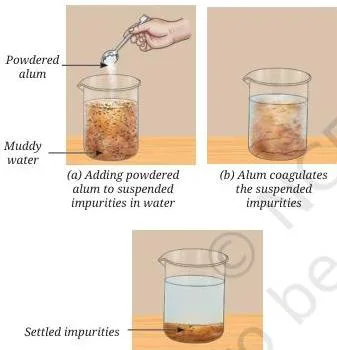
Fig. 5.20 shows the paperfuge (NCERT, p. 87): an idea borrowed from a common toy, built as a simple hand-powered disc that spins blood samples fast enough to separate heavier from lighter components. Because it needs no electricity, this low-cost tool helps detect diseases like malaria and anaemia in remote areas.
Fresh everyday uses: the same outward-pulling idea runs your washing machine’s spin cycle, which flings water out of wet clothes, and a salad spinner, which flings water off washed leaves. Faster spin, faster separation.
Coagulation: clumping tiny particles together
What it separates: fine suspended particles from a liquid when they are too small to settle or filter. Property it uses: a coagulant makes the tiny particles clump into larger masses that gravity settles.
Adding powdered alum (fitkari) to muddy water makes the fine clay particles clump together — this is coagulation, and the alum is the coagulant (NCERT, p. 87). The larger clumps settle by gravity and are then removed by decantation or filtration.
The everyday version is paneer: acid (lemon juice or vinegar) acts as the coagulant and clumps the milk proteins into cheese (NCERT, p. 87). Sewage treatment also uses sedimentation, coagulation and filtration to reuse cleaned water.
Suspensions and Colloids: Particle Size Decides
Solutions, suspensions and colloids differ mainly in the size of their particles (NCERT, p. 88):
- Solution: particles smaller than 1 nm diameter.
- Colloid: particles from 1 nm to 1000 nm.
- Suspension: particles larger than 1000 nm.
Memory device (S–M–L): the sizes march like small, medium, large — Solution is Small (under 1 nm), the Medium colloid sits between 1 and 1000 nm, and the Large suspension tops 1000 nm.
Table 5.1 in the textbook is left blank for students to fill. Here is the completed version for revision:
| Property | Solution | Suspension | Colloid |
|---|---|---|---|
| Nature | Homogeneous | Heterogeneous | Heterogeneous, but appears uniform because particles are evenly dispersed |
| Particle size | Below 1 nm | Above 1000 nm | 1–1000 nm |
| Visibility | Not visible | Visible to the naked eye | Not visible to the naked eye |
| Separation by filtration | Not separated | Separated (usually) | Cannot be separated by ordinary filtration |
| Settling | Does not settle | Settles on standing | Does not settle over time |
| Tyndall effect | No | Yes | Yes |
- Examples of solutions: salt solution, vinegar, aerated drinks.
- Examples of suspensions: sand in water, sawdust in water, tea leaves in water, muddy water.
- Examples of colloids: milk, blood, tomato sauce, ice cream, smoke, fog.
In a colloid, the dispersed particles form the dispersed phase, and the substance they are suspended in is the dispersion medium (NCERT, p. 88).
Emulsions are colloids in which both phases are liquids (NCERT, p. 89). Milk and vanishing cream are oil-in-water emulsions; butter, body lotions and cold cream are water-in-oil emulsions. Emulsifying agents stabilise them — the proteins in milk and butter act as emulsifying agents.
Tyndall Effect: Why a Laser Beam Lights Up a Colloid
The Tyndall effect is the scattering of light by particles, first explained by the scientist John Tyndall (NCERT, p. 88). Look back at Activity 5.1 with the laser pointer:
- In the salt solution, the beam’s path is invisible — particles are too small to scatter light.
- In the chalk-water suspension and in the milk mixture, the beam’s path is clearly visible because particles scatter the light.
Why the difference? Scattering needs particles big enough to interact with light. Solution particles are under 1 nm and do nothing; suspension and colloid particles are large enough to spread the beam.
You see the Tyndall effect everywhere: a fine beam entering a dark room through a small hole (dust and smoke scatter it), the floodlights in a sports stadium (Fig. 5.24), and — the fresh case — car headlights becoming visible in fog.
Exam tip: the Tyndall effect is the quickest practical test to tell a colloid from a true solution. Shine a beam through the liquid: the path shows in a colloid, not in a solution.
Worked Examples: Concentration and Solubility Calculations
Four original problems covering all three formulas plus a cooling (crystallization) calculation. Work them with paper before reading the steps.
Example 1: Mass by mass percentage (% m/m)
Problem: 20 g of salt is dissolved in 180 g of water.
Find the % m/m concentration.
- Step 1: Mass of solute (salt) = 20 g.
- Step 2: Mass of solution = mass of solute + mass of solvent = 20 g + 180 g = 200 g.
- Step 3: Apply Eq. 5.1:
\[ \text{Mass by mass percentage} = \frac{20\ \text{g}}{200\ \text{g}} \times 100 = 10\%\ \text{m/m} \]
Meaning: every 100 g of this solution contains 10 g of salt.
Example 2: Mass by volume percentage (% m/v)
Problem: 15 g of glucose is dissolved and made up to 250 mL of solution.
Find the % m/v concentration.
Step 1: Mass of solute (glucose) = 15 g.
Volume of solution = 250 mL.
Step 2: Apply Eq. 5.2:
\[ \text{Mass by volume percentage} = \frac{15\ \text{g}}{250\ \text{mL}} \times 100 = 6\%\ \text{m/v} \]
Meaning: this is a 6% glucose solution — each 100 mL holds 6 g of glucose.
Example 3: Volume by volume percentage (% v/v)
Problem: 8 mL of perfume essence is mixed with water to make 200 mL of solution.
Find the % v/v concentration.
Step 1: Volume of solute (essence) = 8 mL.
Volume of solution = 200 mL.
Step 2: Apply Eq. 5.3:
\[ \text{Volume by volume percentage} = \frac{8\ \text{mL}}{200\ \text{mL}} \times 100 = 4\%\ \text{v/v} \]
Meaning: 100 mL of the mixture holds 4 mL of perfume essence.
Example 4: Cooling a saturated solution — how much solid crystallizes
Problem: Substance X has solubility 180 g per 100 g of water at 80 °C and 120 g per 100 g of water at 30 °C.
A saturated solution of X cools from 80 °C to 30 °C.
How much X deposits per 100 g of water?
- Step 1: At 80 °C, 100 g of water can hold at most 180 g of X.
- Step 2: At 30 °C, the same 100 g of water can hold only 120 g.
- Step 3: Mass that crystallizes = solubility at 80 °C − solubility at 30 °C:
\[ 180\ \text{g} – 120\ \text{g} = 60\ \text{g} \]
Meaning: 60 g of pure X separates out as crystals for every 100 g of water as the solution cools.
Common Mistakes Students Make
Six traps in this chapter, each with the correction and a quick way to check your work:
| Students write… | Correct rule | How to check your answer |
|---|---|---|
| “10 g salt in 90 g water is 11.1% m/m” | It is 10% m/m, because the denominator is the mass of the solution (solute + solvent = 100 g), not the solvent (NCERT, p. 76) | Add solute and solvent first, then divide |
| “Distillation can separate liquids with the same boiling point” | No — the boiling points must differ by about 25 °C; smaller differences need fractional distillation (NCERT, p. 81) | Check the boiling-point gap before choosing |
| “Evaporation and crystallization are the same” | Evaporation drives off the solvent leaving a powder; crystallization recovers pure, geometrically shaped crystals from a saturated solution as it cools (NCERT, pp. 78, 83) | Ask: do you need a powder or crystals? |
| “In chromatography the solvent must cover the ink spot” | The solvent level must stay below the spot, or the ink dissolves into the solvent instead of separating (NCERT, p. 83) | Check the water level against the spot before starting |
| “All substances become more soluble on heating” | Gases become less soluble as temperature rises (NCERT, p. 77) | Think of a fizzy drink going flat when warm |
| “Suspension and colloid are the same” | Colloids do not settle and cannot be filtered out; suspensions settle on standing (NCERT, p. 88) | Leave the mixture — if it settles, it is a suspension |
Exam Notes: How This Chapter Is Usually Tested
Everything below is drawn only from the chapter’s own “Revise, Reflect, Refine” exercise set (NCERT, pp. 91–93), so you know exactly which skills to practise:
- Classifying mixtures as homogeneous/heterogeneous and as solution/suspension/colloid (Q1, Q3).
- Choosing a separation method AND giving the reason — the reason earns the mark, so always state the physical property you are exploiting (Q5, Q7).
- Assertion–reason statements about the Tyndall effect (Q6).
- Reading a solubility table (grams per 100 g of water at a given temperature) or a solubility curve (Q13, Q4).
- % m/m calculations from given masses, plus comparing which solution is most concentrated (Q4, Q14).
- Drawing labelled diagrams — a distillation set-up or a separating funnel (Q5, Q8, Q15).
- Sequencing techniques for a three-component mixture like sand, common salt and naphthalene (Q11).
Use the chapter-end questions as a self-test after revising — attempt them on your own, then check against the textbook. This page deliberately does not reproduce their answers. When you finish this chapter, continue revising with our Describing Motion Around Us and How Forces Affect Motion notes.
Revision Recap: The Chapter in One Table
The decision table below matches every separation technique to the type of mixture it handles and the physical property it exploits. Revise the whole chapter from this table in five minutes:
| Technique | Mixture it separates | Property it uses | Example from the chapter |
|---|---|---|---|
| Crystallization | Pure solid from a saturated (homogeneous) solution | Difference in solubility with temperature | Copper sulfate crystals; salt from seawater (NCERT, pp. 78–81) |
| Distillation | Two miscible liquids, boiling points differ by ~25 °C; or liquid from dissolved solids | Difference in boiling points | Acetone (56 °C) and water (100 °C) (NCERT, p. 81) |
| Fractional distillation | Components with boiling points differing by less than 25 °C | Small boiling-point differences | Crude petroleum into gas, petrol, kerosene, diesel (NCERT, p. 82) |
| Paper chromatography | Coloured components of a mixture | Rates of movement on paper | Black sketch-pen ink splitting into colours (NCERT, p. 83) |
| Separating funnel | Two immiscible liquids | Difference in density | Mustard oil and water (NCERT, p. 84) |
| Sublimation | A sublimable solid from a non-sublimable solid | Direct solid-to-vapour change below melting point | Camphor and sand; naphthalene (NCERT, p. 85) |
| Centrifugation | Heavier solids from a solid-liquid mixture | Outward force when spun fast | Red blood cells from plasma; paperfuge (NCERT, pp. 86–87) |
| Coagulation | Fine suspended particles from a liquid | Coagulant clumps particles so they settle | Alum (fitkari) in muddy water; paneer from milk (NCERT, p. 87) |
Key terms to recall: homogeneous, heterogeneous, solute, solvent, solution, concentration, solubility, saturated solution, solubility curve, crystal, crystallization, distillation, fractional distillation, paper chromatography, immiscible, sublimation, deposition, alloy, suspension, colloid, dispersed phase, dispersion medium, emulsion, coagulant, Tyndall effect.
Compare evaporation, crystallization and distillation by asking what you want back: evaporation keeps only the solute as a powder, crystallization keeps the solute as pure crystals, and distillation recovers the solvent (or the lower-boiling liquid) as well.
For more revision, browse all Class 9 notes, explore CBSE notes by class and subject, or revisit Tissues in Action, where you learned that blood connects the body by transporting nutrients, gases and hormones.
Reference: NCERT Class 9 Science (Exploration) textbook, chapter Exploring Mixtures and their Separation.
FAQs
Why does milk show the Tyndall effect but a salt solution does not?
Milk is a colloid with particles between 1 and 1000 nm, large enough to scatter light and make a beam visible. A salt solution has particles smaller than 1 nm, so they scatter nothing — the beam’s path stays invisible (NCERT, pp. 87–88).
What is the difference between evaporation and crystallization?
Evaporation drives off the solvent and leaves the solute as a powder or paste. Crystallization recovers a pure solid as regular, geometrically shaped crystals by cooling a saturated solution slowly (NCERT, pp. 78 and 83).
Why can oil and water be separated with a separating funnel but acetone and water cannot?
Oil and water are immiscible, so they form two distinct layers by density and the funnel drains each separately. Acetone and water are miscible — they mix uniformly into one layer — so a funnel does nothing; they need distillation because their boiling points differ enough (NCERT, pp. 81, 84).
What is the difference between distillation and fractional distillation?
Distillation separates liquids whose boiling points differ by at least about 25 °C. Fractional distillation handles smaller differences (less than 25 °C), as used to separate crude petroleum into fractions like gas, petrol, kerosene and diesel (NCERT, pp. 81–82).
Is blood a solution, suspension or colloid? Give reasons.
Blood is a colloid (NCERT, p. 87). Blood cells cannot be seen with the naked eye (unlike suspension particles), they do not settle over time, and they cannot be separated by ordinary filtration — yet centrifugation does separate them into red cells and plasma (NCERT, pp. 87–88).
Why is hospital saline written as 0.9% m/v and what does it mean?
It means 0.9 g of sodium chloride (common salt) in every 100 mL of solution (NCERT, p. 77). This concentration is safe for blood — it replaces lost body fluids without harming the blood’s own balance.
Explore Class 9 Science Notes
Class 9 Science on LearnCBSE:
Related chapters: